
ਗੁਰਬਾਣੀ।
گربانی۔
Gurbani.
ਬੇਅੰਤ ਬਾਣੀ।
بیئنت بانی۔
Collected Gurbani.
-
![]()
ਗਾਥਾ ॥ گاتھا ۔۔
Gatha.
The Hymns of Guru Arjan Sahib [1563-1606] in the post-Raag section of 24 Stanzas on Angs 1,360-1,361 in the Guru Granth Sahib in the Sahaskriti mixture - Panjabi Prakrit, Buddhist Pali & Ved Sanskrit, based on the Old Indic and Avestan-Iranic metre of praise.
(ਮਹਲਾ ੫ ਗਾਥਾ / مہلا ۵ گاتھا)
-
![]()
ਗੁਣਵੰਤੀ ॥ گنونتی ۔۔
Gunvanti.
Literally meaning “A Woman of Becoming Qualities”, this is a composition of Guru Arjan Sahib [1563-1606] in Raag Suhi that follows the “Kuchaji” & “Suchaji” works of Guru Nanak Sahib [1469-1539], almost as a summative analysis.
(ਸੂਹੀ ਮਹਲਾ ੫ ਗੁਣਵੰਤੀ ॥ / سوہی مہلا ۵ گنونتی ۔۔)
-
![]()
ਰੱਖਿਆ ਦੇ ਸ਼ਬਦ। رکھیا دے شبد۔
Rakhia De Shabad.
A short combination of 4 Hymns of Guru Arjan Sahib [1563-1606] in Raag Sorath, Raag Bilaval, Raag Gujri & Raag Gauri found across the Guru Granth Sahib.
(ਸੋਰਠਿ + ਬਿਲਾਵਲੁ + ਗਉੜੀ + ਗੂਜਰੀ)
(سورٹھِ + بلاولُ + گؤڑی + گوجری)
-
![]()
ਆਰਤੀ ॥ آرتی ۔۔
Aarti.
The Critique of the Aarti Aarta Idol Worship by Guru Nanak Sahib [1469-1539], beginning with 12 Lines found on Ang 663 in the Guru Granth Sahib, and followed with Hymns of Bhagat Ravidas Ji [b. 1377?], Bhagat Sain Ji, Bhagat Kabir Ji [1398-1448], Bhagat Dhanna Ji [1415-1475] & Guru Gobind Singh Sahib [1666-1708].
(ਰਾਗੁ ਧਨਾਸਰੀ ਮਹਲਾ ੧ ॥ / راگُ دھناسری مہلا ۱ ۔۔)
-
![]()
ਰਾਮਕਲੀ ਸਦੁ ॥ رامکلی سدُ ۔۔
The Call of Death (Ramkali Sadd).
Written by one Baba Sundar Bhalla Ji, a great-grandson of Guru Amar Das Sahib [1479-1574] through his youngest son Baba Mohri Bhalla Ji [b. 1539], then his son Baba Anand Bhalla Ji. This piece is the only work in the Guru Granth Sahib by a blood relative of the Gurus, aside from the Gurus themselves. Found on Angs 923-924 in Raag Ramkali.
-
![]()
ਸਤਾਰਾਂ ਪੜਤਾਲ। ستاراں پڑتال۔
17 Parrtaal.
A collection of 17 different compositions all in the Parrtaal measure; 7 by Guru Ram Das Sahib [1534-1581] & 10 by Guru Arjan Sahib [1563-1606], found across various Raags in the Guru Granth Sahib, ranging from Angs 408-1,341.
-
![]()
ਦਸ ਬਿਭਾਸ। دس ببھاس۔
A collection of 10 different compositions all in the Bibhaas measure, and all found in Raag Prabhati. The hymns are 2 of Guru Nanak Sahib [1469-1539], 1 of Guru Amar Das Sahib [1479-1574], 2 of Guru Ram Das Sahib [1534-1581] 4 of Guru Arjan Sahib [1563-1606] and 1 of Bhagat Kabir Ji [1398-1448].
(ਰਾਗੁ ਪ੍ਰਭਾਤੀ / راگُ پربھاتی)
-
![]()
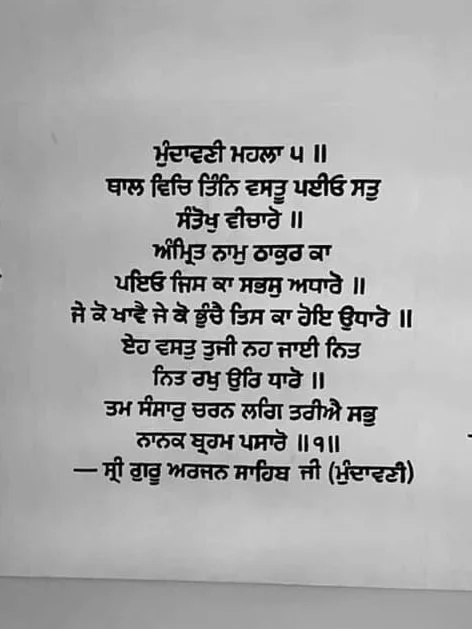
ਮੁੰਦਾਵਣੀ ॥ منداونی ۔۔
Mundavani.
“The Closing Seal” of the Guru Granth Sahib, by Guru Arjan Sahib [1563-1606], on Ang 1,429.
(ਮੁੰਦਾਵਣੀ ਮਹਲਾ ੫ ॥ / منداونی مہلا ۵ ۔۔)
ਸ਼ੁੱਧ ਬਾਣੀ।
شدھّ بانی۔
Curated Gurbani.
-
![]()
ਵਾਰ ਮਾਝ ਕੀ ਸੁਧੁ ਪਉੜੀ ॥ وار ماجھ کی سدھُ پؤڑی ۔۔
The Proclamation (Vaar Majh Ki Sudh Pauri).
Proponents against Sikhi argue that Guru Nanak Sahib [1469-1539] never openly proclaimed his Divine Message-Mission as other prophets and apostles establishing new faiths did, in attempts to render him as a mere social reformer. But Guru Nanak Sahib did, in this important and concluding Hymn of Vaar Majh Ki.
-
![]()
ਬਸੰਤੁ ਹਿੰਡੋਲੁ ਮਹਲਾ ੧ ਘਰੁ ੨ ॥ بسنتُ ہنڈولُ مہلا ۱ گھرُ ۲ ۔۔
Basant Hindol Mehl 1 Ghar 2.
Written in the Raag of Spring (Basant), Hindol itself is a variant found only in the Guru Granth Sahib. Here, Guru Nanak Sahib [1469-1539] delivers a profound message with reference to the indigenous populations of Panjab and India altering their ways and in turn, becoming foreign. The argument is to remain native to your roots and not fall to the sway of mimicking foreign ideologies that have no place in one’s indigenous land, social fabric and culture.
-
![]()
ਨਾ ਹਿੰਦੂ ਨ ਮੁਸਲਮਾਨ ॥ نا ہندو ن مسلمان ۔۔
Neither Hindu Nor Muslim (Bhairo Mehl 5).
The 3rd Stanza of Guru Arjan Sahib [1563-1606] in Raag Bhairo. Despite the first proclamation of Guru Nanak Sahib [1469-1539] being: “There is no Hindu, there is no Muslim”, propagandist proponents against Sikhi are erroneously vehement that written proof by the Guru is required to satisfy their ego. There is such proof in the Guru Granth Sahib, exclaimed by Guru Nanak Sahib in his 5th form as Guru Arjan Sahib.
-
![]()
ਭੈਰਉ ਮਹਲਾ ੫ ॥ بھیرؤ مہلا ۵ ۔۔
The Hunt (Bhairo Mehl 5).
The 4th Stanza of Guru Arjan Sahib [1563-1606] in Raag Bhairo. What makes this Stanza of 10 Lines unique is that the Guru is describing a hunt. It is true in that Guru Arjan Sahib at times did go hunting with his force of 52 Sikh bodyguards; the earliest form of the Akal Sena Fauj later inherited by Guru Hargobind Sahib [1595-1644]. Guru Arjan Sahib here could have been narrating one of his many hunts in poetic measure & could be nicknamed “The Hunt”.
-
![]()
ਅਜਰਾਈਲ ਬਾਣੀ। ازرائیل بانی۔
Azrael Bani.
Azrael (עֲזַרְאֵל / عزرائيل), is known in Judeo-Christian & Islamic eschatology as “The Archangel of Death”. However, the analogy too is present in the Guru Granth Sahib - evidently displaying just how far reaching Sikh Doctrine truly is, as intended. The use of Azrael appears 8 times in Gurbani, twice by Guru Nanak Sahib [1469-1539], once by Guru Ram Das Sahib [1534-1581], 4 times by Guru Arjan Sahib [1563-1606] & once by Sheikh Baba Farid Ji [1188-1266]; presented here in order of appearance.
-
![]()
ਸ੍ਰੀ ਸੈਣ—ਸ੍ਰੀ ਪੀਪਾ। سری سین—سری پیپا۔
Bani of Bhagat Sain & Bhagat Pipa.
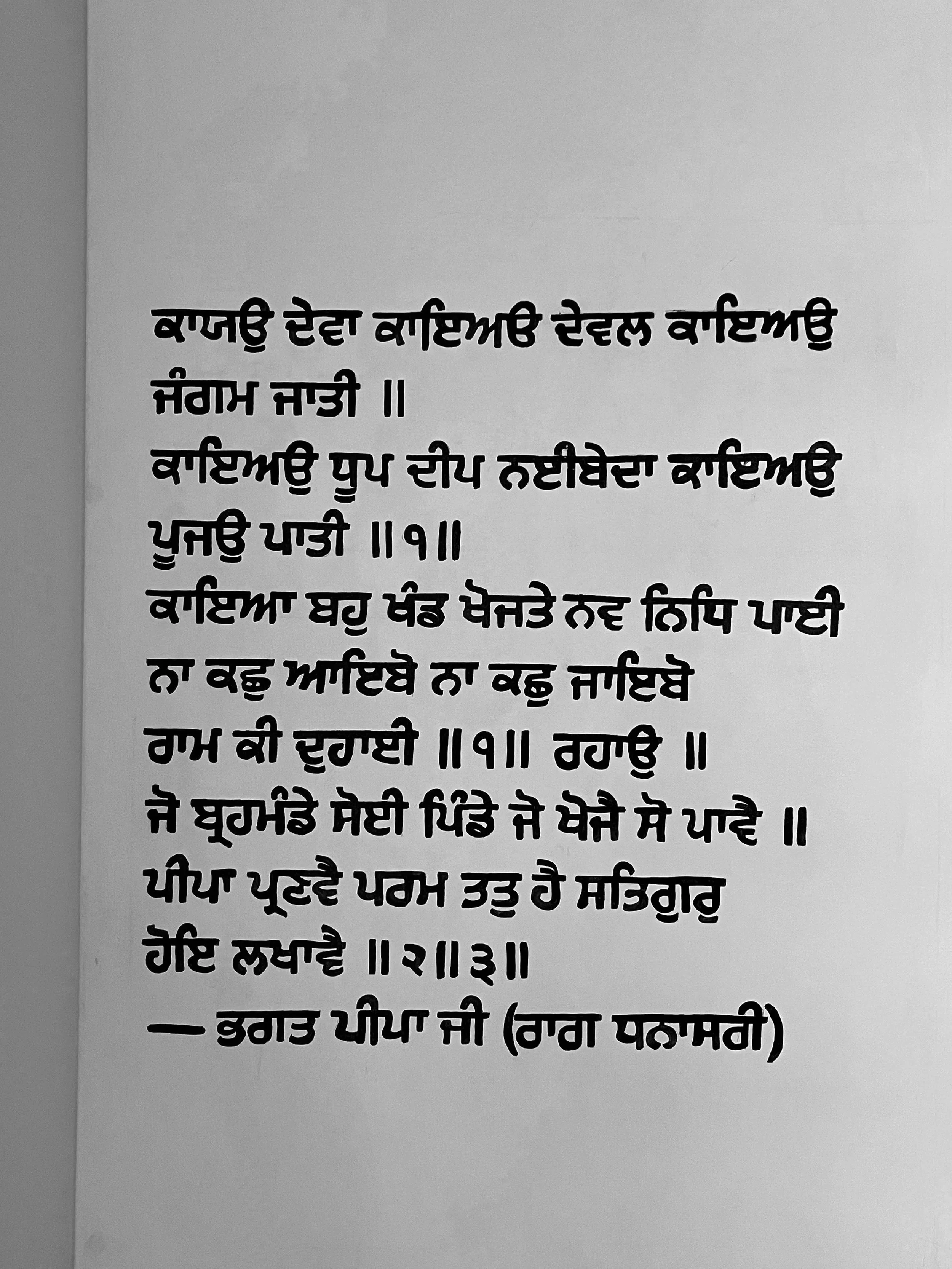
The two Saints of the Indian Subcontinent, Sain (a disciple of Ramanand [1300-1411] & barber turned saint) and Pipa (a disciple of Ramanand & prince turned saint [b. 1425]), both found ways to renunciate Idol Worship & critiqued the Aarti Aarta practice. Their verses come one after another, building on the critique, in Raag Dhanasari, Ang 695.
-
![]()
ਬ੍ਰਹਮ ਕਵਚ। برہم کوچ۔
Brahm Kavach.
The only hymns believed to be of Guru Hargobind Sahib [1595-1644]. 15 Lines in nature, it can be found in Dasam Sundar Gutkas with the moniker “Patshahi 10”, meaning this was possibly orally transmitted by Guru Gobind Singh Sahib [1666-1708] then written down in sometime.
-
![]()
ਗੁਰੂ ਹਰਿ ਰਾਇ ਜੀ ਕੀ ਵਾਰ। گرو ہرِ رائ جی کی وار۔
Guru Har Rai Ji Ki Vaar.
Guru Har Rai Sahib [1630-1661] always taught the Sikhs good conduct. Alongside known to have been constantly reciting the Mool Mantar of Guru Nanak Sahib [1469-1539], Guru Har Rai Sahib also regularly at sermons reminded the Sikhs of Vaar 28, Pauri 15 (Gurdas Vaaran) of Bhai Gurdas Ji [1551-1636].
(ਸਿੱਖ ਦੀ ਨਿੱਤ ਕਮਾਈ / سکھّ دی نتّ کمائی)
-
![]()
ਸਲੋਕੁ ਮਰਦਾਨਾ ੧ ॥ سلوکُ مردانا ۱ ۔۔
Salok Mardana.
The Salok of Bhai Mardana Ji [1459-1534], the long-time childhood friend & accompanying rebab player of Guru Nanak Sahib [1469-1539], who so also has one poem of 4 Stanzas in the Guru Granth Sahib. It can be read on Ang 553 in Raag Bihagraha.
(ਬਿਹਾਗੜੇ ਕੀ ਵਾਰ ਮਰਦਾਨਾ ੧ ॥)
(بہاگڑے کی وار مردانا ۱ ۔۔)
-
![]()
ਸ੍ਰੀ ਮੁਖਵਾਕ ਪਾਤਿਸਾਹੀ ੨। سری مکھواک پاتساہی دوجی۔
The Sacred Utterances of the Second Emperor (Sri Mukhvaak Patshahi 2).
Guru Angad Sahib [1504-1552] only has a total of 63 Saloks of Gurbani in the Guru Granth Sahib, the least of the first 5 Gurus [1469-1606]. This makes his Gurbani only the more interesting to read. Collected here are 15 Saloks (Stanzas) from Raag Asa, his most in any Raag, all in Asa Di Vaar.
(ਆਸਾ ਕੀ ਵਾਰ ਸਲੋਕ ਮਹਲਾ ੨ ॥)
(آسا کی وار سلوک مہلا ۲ ۔۔)
-
![]()
ਹਕੀਕਤਨਾਮਾ। ہکیکتناما۔
Devgandhari–Jaijavanti Mehl 9 (The Epistle of Reality).
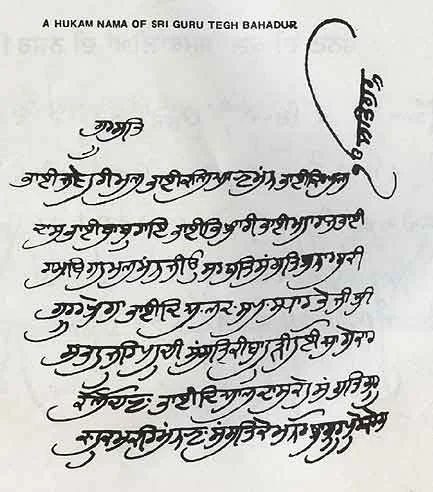
3 Hymns of Guru Tegh Bahadur Sahib [1621-1675] on Ang 536 and the entire Raag of Jaijavanti on Ang 1,352-1,353 of the Guru Granth Sahib; sweet, concise & based wholly in reality & the necessary truth on this mortal abode called Earth.
(ਦੇਵਗੰਧਾਰੀ–ਜੈਜਾਵੰਤੀ ਮਹਲਾ ੯ ॥)
(دیوگندھاری–جیجاونتی مہلا ۹ ۔۔)
-
![]()
ਪੁਰਾਤਨ—ਨਵੀਨ ਬਾਣੀ। پراتن—نوین بانی۔
The Old & New (Puratan–Naveen Bani).
In the Guru Granth Sahib, the 2 compositions of Bhagat Jaidev Ji [1170-1245] are factually the oldest within. Then, a certain Hymn uttered by a 9-year-old Guru Nanak Sahib [1469-1539] is widely attested as his first piece of poetry. Finally, the concluding Dohra of Salok Mehl 9 by Guru Tegh Bahadur Sahib [1621-1675], added by Guru Gobind Singh Sahib [1666-1708], is known as the most recent addition in 1706.
-
![]()
ਬਾਬਰਵਾਣੀ। بابروانی۔
Babarvani.
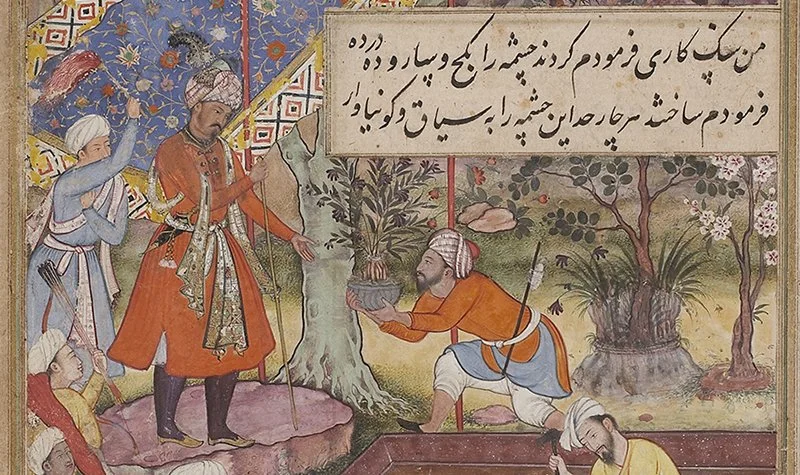
The Record of Hymns by Guru Nanak Sahib [1469-1539] detailing the Invasion of Mughal Emperor Babur [1483-1530] into Panjab, found across the Guru Granth Sahib. Historians generally consider the Babarvani to be the only written record from the Indian Subcontinent detailing Babur’s campaign into Panjab and India.
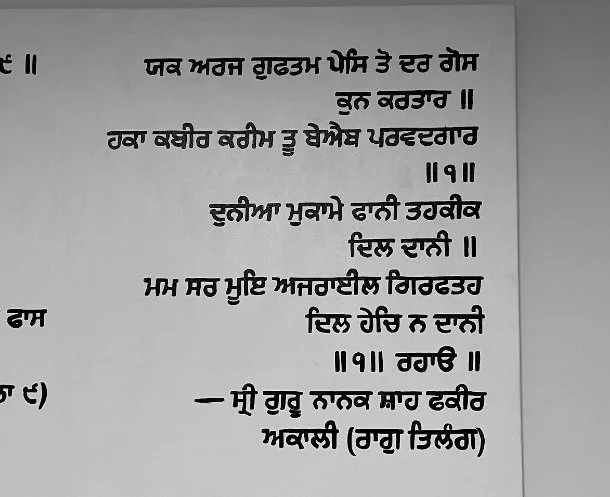
(ਆਸਾ ਮਹਲਾ ੧ + ਤਿਲੰਗ ਮਹਲਾ ੧)
(آسا مہلا ۱ + تلنگ مہلا ۱)


FAQs.
-
The Curator believes this page on Ranneeti offers a unique selection of specific verses that can help the reader, Sikh and non-Sikh alike, engage in thoughtful and historical dissection of Gurmat [Sikh Doctrine] through the written word. This specialized and curated selection offers a distinct take on verses that are otherwise overlooked and go on to shape Gurmat (Gurbani, Gur-Rehit & Gur-Itihaas).
-
The Curator stresses presentation of the most information possible to provide the reader with an ample background on what Sikh studies has developed upon the respective Gurbani over the centuries.
Whereas most Gurbani websites share the standard exegesis of the Faridkot Teeka & SGGS Darpan combined with the translations of Dr. Sant Singh Khalsa & Bhai Manmohan Singh, Ranneeti goes beyond. For the selected Shabads presented, further exegesis from the Darshan Nirney Steek, Giani Bishan Singh Steek, Arth Bodh Dr. Rattan Singh Jaggi and more are shared for increased dissemination.
As for translations, coupled with the two aforementioned, translations by Dr. Kartar Singh Duggal, Dr. Gurbachan Singh Talib and more will allow for the reader to understand the various takes on what scholars present on Gurbani.
A grand total of 18 different sources from 15 different authors are available to read across the Gurbani selection on Ranneeti. With more to be expanded upon the current selection.